A backyard swimming pool can be a great feature, but for many homeowners, it eventually becomes a costly and underused space. Whether due to high maintenance costs, safety concerns, or the desire to reclaim your yard for new landscaping, a pool demolition can be a smart investment. However, it’s not as simple as just filling in the hole. Proper swimming pool demolition requires planning, the right equipment, and professional expertise. Here’s a step-by-step guide on how to successfully plan and execute a pool removal project.
Content
1. Understanding the Pool Demolition Process
Before starting, it’s important to understand what a swimming pool demolition actually involves. There are two primary methods: partial pool removal and complete pool removal.
- Partial pool removal: This involves breaking up the pool’s top layer, puncturing the bottom for drainage, and filling the remaining structure with soil and gravel. It’s faster and more affordable but may have restrictions if you plan to build on the area later.
- Complete pool removal: The entire pool structure is excavated and removed before being filled and compacted with soil. Though more expensive, this option provides greater flexibility for future construction or landscaping projects.
A qualified demolition contractor can help you determine which approach is best based on your property, budget, and long-term plans.
2. Securing the Necessary Permits
Every city has regulations governing swimming pool removal, and San Jose is no exception. Homeowners must typically apply for a demolition permit before work can begin. These permits ensure the project meets local safety and environmental standards. Failing to obtain the proper paperwork can result in fines or delays, so it’s best to work with an experienced demolition contractor familiar with local building codes and inspection requirements.
3. Choosing the Right Demolition Contractor
Selecting the right professional for your project is crucial. A reliable demolition contractor will not only bring the right machinery but also handle permits, safety precautions, debris disposal, and site restoration. Look for contractors who:
- Are licensed, insured, and bonded.
- Have positive reviews or references from past clients.
- Offer clear, written estimates with itemized costs.
- Understand local regulations for swimming pool removal.
Hiring a professional team ensures the work is done safely, efficiently, and in compliance with all municipal standards.
4. Preparing the Site for Demolition
Once your contractor is hired and permits secured, the next step is site preparation. This involves:
- Draining the pool: The water must be safely pumped out and disposed of per environmental guidelines.
- Disconnecting utilities: Power, gas, and water lines connected to pool equipment must be capped or rerouted.
- Protecting the property: Temporary fencing, tarps, and equipment mats help prevent damage to your lawn or nearby structures during the pool demolition process.
5. The Demolition and Removal Process
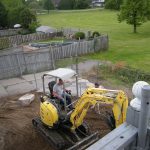
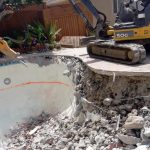
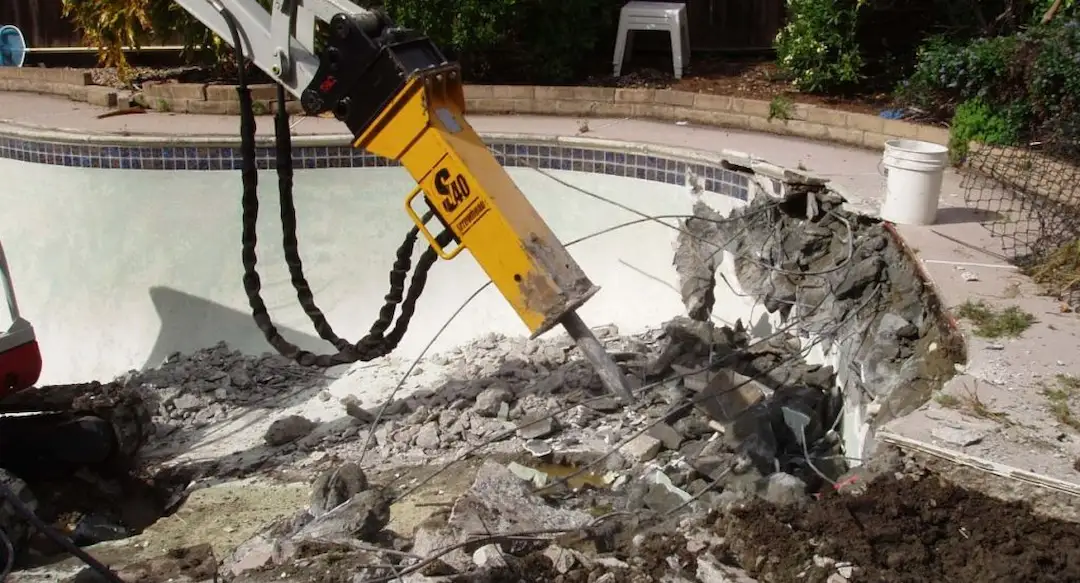
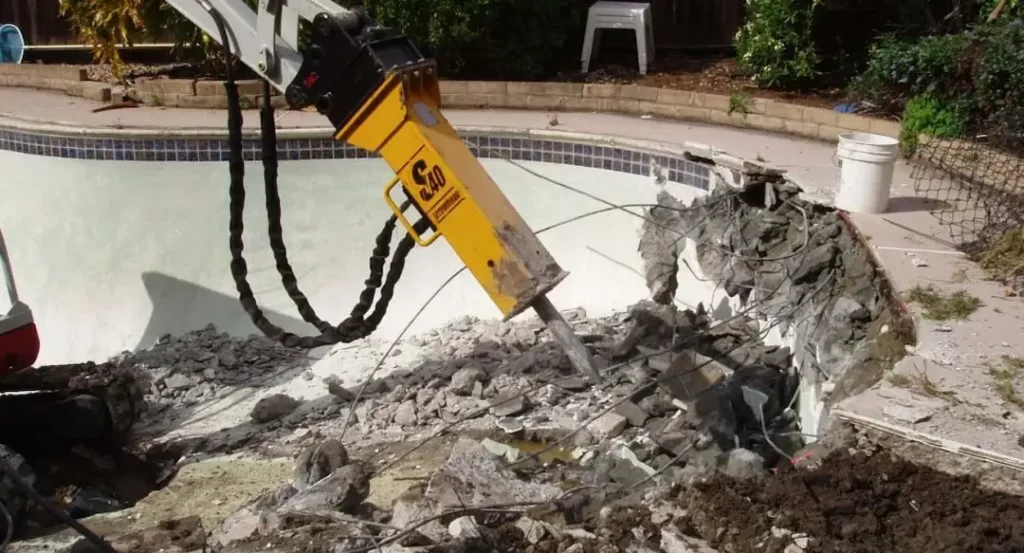
During demolition, heavy machinery is used to break apart concrete, gunite, fiberglass, or vinyl pool materials. If you opt for a complete pool removal, the debris is loaded onto trucks and hauled away for recycling or proper disposal. For partial removals, the pool shell fragments are compacted into the cavity before filling.
After debris removal, the contractor fills the space with a mix of gravel and topsoil. Proper compaction is critical—it prevents future settling, uneven surfaces, or drainage issues. A well-executed swimming pool removal should leave your yard stable and ready for new landscaping or construction.
6. Post-Demolition Restoration
Once the pool demolition is complete, your property can be transformed. Many homeowners choose to install lawns, patios, or gardens in the reclaimed space. Others use it for home expansions or accessory dwelling units (ADUs). Your contractor may offer soil testing and grading services to ensure proper drainage and a smooth foundation for whatever comes next.
It’s a good idea to let the newly filled soil settle for a few weeks before starting any major landscaping or construction. This ensures stability and prevents future surface dips.
7. Environmental Considerations
A professional demolition contractor will also manage debris disposal responsibly. Concrete, rebar, and metal components can often be recycled, reducing landfill waste. By following environmental best practices, you’ll not only protect your property but also minimize your project’s ecological footprint.
Proper drainage management is another key consideration. The pool’s drainage must be modified to ensure that rainwater and irrigation flow naturally across the new landscape without pooling or erosion.
8. Cost and Timeline Expectations
The cost of swimming pool demolition can vary widely depending on factors like pool size, accessibility, material type, and chosen demolition method. On average, a partial removal may take 3–5 days and cost significantly less than a complete excavation, which could take 7–10 days. Always request multiple quotes to compare pricing and service options before committing to a contractor.
9. Benefits of Removing an Old Pool
Beyond the practical advantages, swimming pool removal can increase property value and marketability. Many buyers prefer low-maintenance yards with flexible space for gardening or entertainment. Additionally, eliminating unused pools can lower utility bills, insurance premiums, and maintenance costs, making it a sound long-term investment.
Final Thoughts
A pool demolition is more than just a construction task—it’s a property improvement project that can completely transform your outdoor space. With proper planning, permits, and the expertise of a qualified demolition contractor, you can ensure your project is completed safely, efficiently, and in compliance with all regulations. Whether you’re reclaiming space for landscaping, adding new features, or preparing for future construction, a professional swimming pool removal offers lasting value and peace of mind.

My name is Gwen Elmore. I post about home improvement ideas and how to make your home look beautiful and liveable. I hope my posts will help you with your DIY projects!